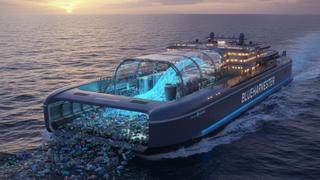
Did Norway launch an autonomous ship, the BlueHarvester, which can clean plastic from the ocean and then turn that plastic into fuel it uses to power itself? No, that's not true: Images of the BlueHarvester are AI-generated. A search of the Norwegian Maritime Authority database for BlueHarvester finds there is no record of a vessel by this name.
The description of the BlueHarvester appeared in a post (archived here) published by the Facebook page Explorify on Nov. 21, 2025. The post is captioned:
🌊 A Breakthrough in Ocean Cleanup! ♻️🚢
Norwegian marine engineers have just launched BlueHarvester--an autonomous, wave-powered vessel that collects floating ocean plastic and converts it into usable fuel right onboard.
As it sails through major ocean gyres using AI-guided routes, BlueHarvester skims debris, breaks it down with catalytic pyrolysis, and then uses the resulting liquid hydrocarbons to power itself. No support ships. No external energy. A true closed-loop system.
During its first 8-day mission in the North Atlantic, it processed over 3 tons of plastic--running entirely on the fuel it created. 🌍💪
With a rugged hull built for months at sea and smart sensors that avoid marine life, BlueHarvester is designed to clean even the most remote parts of the ocean without disturbing ecosystems.
If scaled, this could become one of the most efficient large-scale plastic-removal solutions ever deployed. For the first time, ocean plastic isn't just waste--it's energy.
💙 Would you like to see a global fleet of these vessels working around our oceans?
? #trendy #fblifestyle #facts #fb #viral #fb post
This is what the post looked like on Facebook at the time of writing:
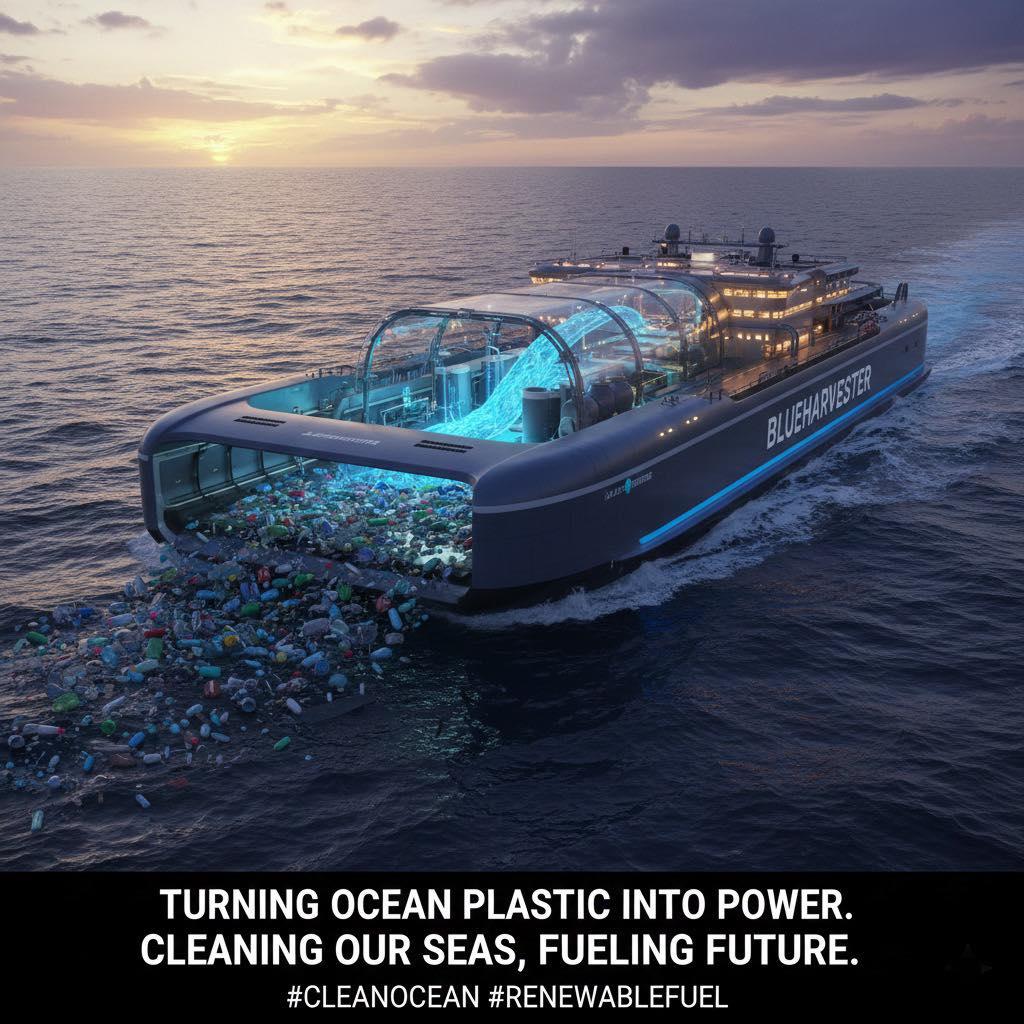
(Image Source: Lead Stories screenshot of Facebook)
This post shows an imaginary futuristic innovation, not a real vessel. The Norwegian Maritime Authority maintains several ship registries (archived here) and the BlueHarvester is not listed in any of them.
There has been a recent clickbait trend of presenting hypothetical techno-utopian innovations as if they are already in use in specifically named countries. In one case, Lead Stories published a fact check about a fictional system of automated sidewalk kiosks in Germany that would anonymously return lost items, such as wallets, to their owners.
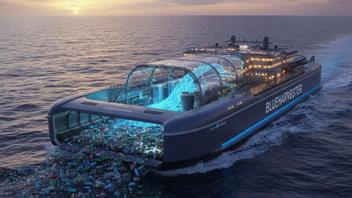
Another version of a BlueHarvester post (archived here) appeared in the Neil deGrasse Tyson group on Nov. 21, 2025. It contains a different AI-generated image of the BlueHarvester (pictured below) that looks nothing like the one on the other post. This post caption is similar but not identical to the other:
In Norway, marine engineers have launched an autonomous ocean vessel that collects floating plastic and converts it into usable fuel onboard. The vessel, BlueHarvester, sails along ocean gyres using AI route planning and wave-powered propulsion.
When it encounters plastic debris, a wide skimming mouth funnels waste onto a processing conveyor. The onboard reactor then breaks down the plastic using catalytic pyrolysis, producing liquid hydrocarbons that power the ship itself. Extra fuel is stored for offloading at port facilities.
During initial missions in the North Atlantic, BlueHarvester processed more than 3 tons of plastic in eight days, running entirely on the fuel it produced. This closed-loop system eliminates the need for support ships or external power.
Norwegian engineers designed the vessel's hull to withstand rough seas and operate for months autonomously. Its sensors avoid marine life and classify material in real time, ensuring debris collection does not disturb ecosystems.
The project aims to create a fleet capable of cleaning remote ocean regions where human crews rarely operate. If scaled, BlueHarvester could become one of the most efficient large-scale plastic-removal systems ever deployed.
For the first time, ocean plastic is becoming not just waste--but energy.

(Image Source: Lead Stories screenshot of Facebook)
Lead Stories reached out to the Center for Plastics Innovation (CPI) at the University of Delaware and the Arctic University of Norway for comment and will update this article if appropriate.