
Does a real video show how a blue whale calf can catch its mother's milk as it flows freely in a stream through the ocean water? No, that's not true: This video is fake. The Hive Moderation tool determined with 99.9% confidence that the video was AI-generated. Real footage of whales nursing does not show a high-velocity stream of milk squirting through seawater from mother to calf.
The fake video appeared in a post published on X by @mindfulheal on April 20, 2026 (archived here). The post was captioned:
The blue whale (Balaenoptera musculus) produces milk so rich and thick it resembles flowing cream... perfectly adapted so her calf can feed underwater without it dispersing. A quiet, powerful reminder that every detail in nature is crafted with astonishing precision. Nature is magical 💙
This is a screenshot from the video:
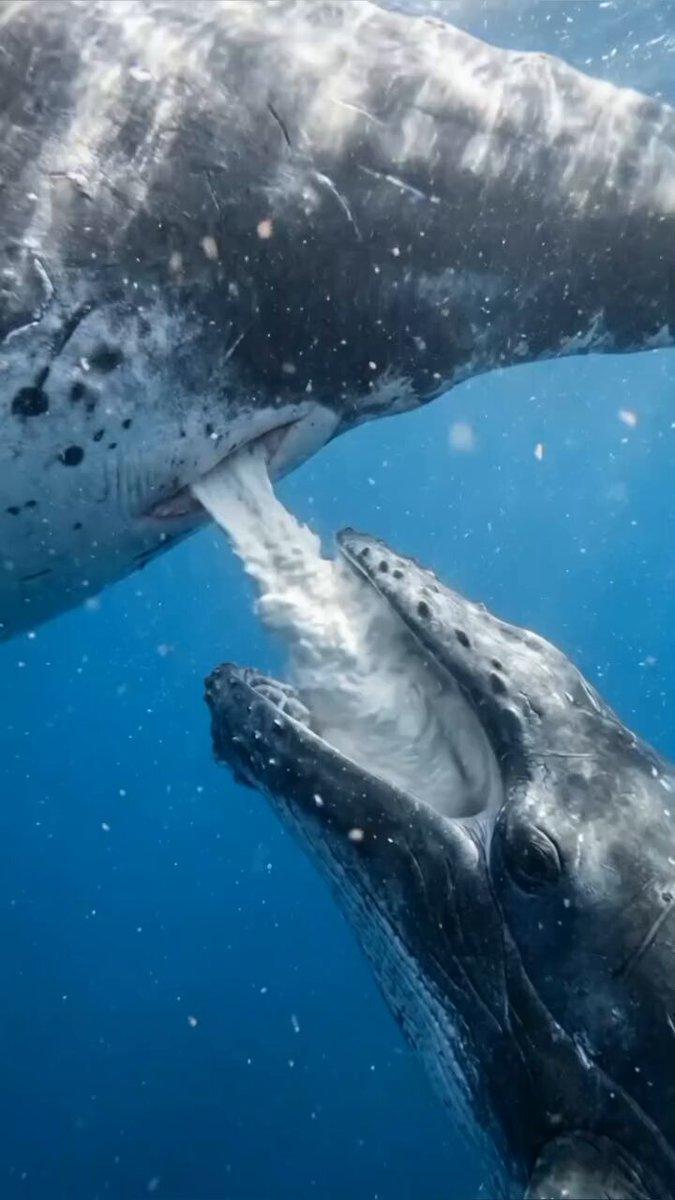
(Image source: @mindfulheal post on X.)
Lead Stories uploaded the 21-second video to Hive Moderation where the content detection tool determined with 99.9% confidence that the video was AI-generated (pictured below).
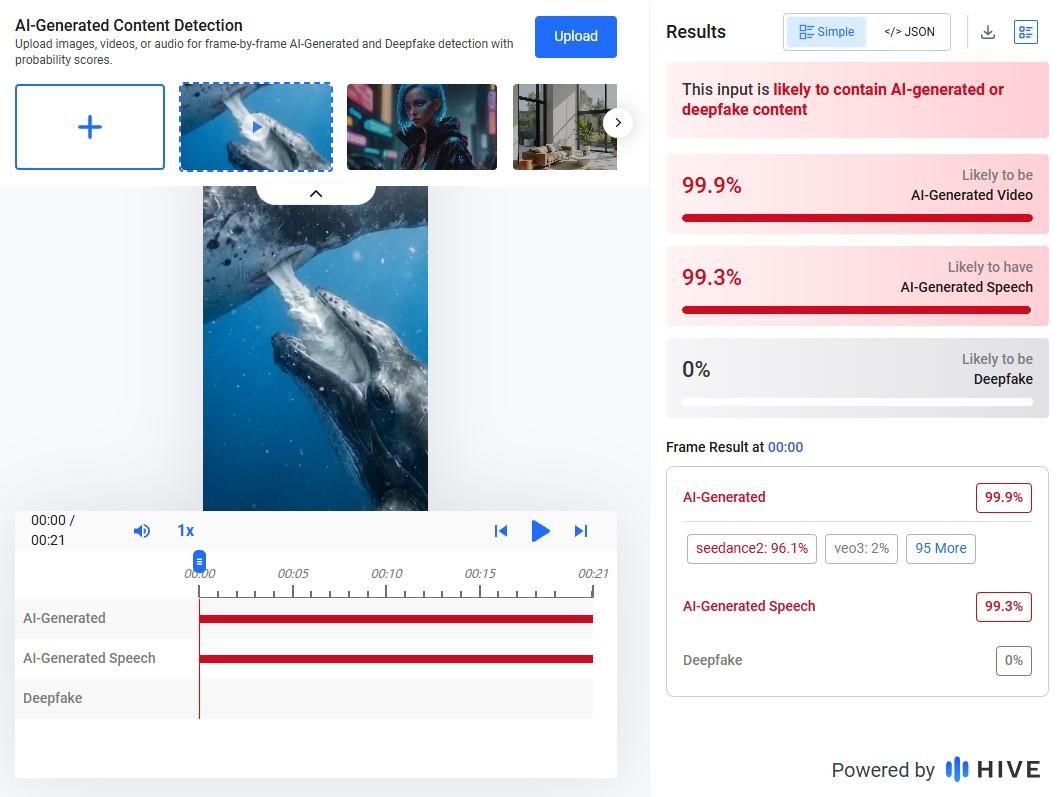
(Image source: Hive Moderation.)
Between 8 and 15 seconds in the video, the AI-generated footage had a glitch, showing the opaque milk flowing in the reverse direction, from the calf toward the mother. The caption of the post implies the video shows a blue whale. The whales pictured seem to be modeled after humpback whales with tubercles on their heads and pectoral fins. This feature unique to humpback whales is noted in a March 2014 article (archived here) in Aquatic Mammals titled, "Short Note Tubercles: What Sense Is There?"
Of these unique features, the bumps on humpback whales' heads (called tubercles) have attracted little scientific interest in the last century. Tubercles are the outermost components of a poorly understood sensory system.
The anatomy and behaviors of humpback whale lactation are described by Maevatiana N. Ratsimbazafindranahaka in a Feb. 17, 2022 article (archived here) published in PeerJ titled, "Characterizing the suckling behavior by video and 3D-accelerometry in humpback whale calves on a breeding ground". To summarize, the female humpback whale has two mammary slits on either side of the genital slit at her midline. Her breast tissue is deep inside the layer of blubber and her nipples are located inside the mammary slits. The calf places its mouth directly against her to suckle. The tongue of the whale calf is described:
...it has been observed that the whale calf has an unusual tongue that is lined with lingual papillae (fringes) that may help the tongue grasp the nipple, and may even seal the tongue into a tube that facilitates transferring milk into the mouth.
Real footage of a humpback whale nursing from its mother was captured from the calf's point of view by a team of researchers from the Marine Mammal Research Program (MMRP). An April 19, 2020 blog post (archived here) on the MMRP website describes the expedition. Using suction cups, researchers temporarily and non-invasively affixed cameras to several whale calves who were with their mothers in the warm waters of the Hawaiian breeding grounds. The video (archived here and embedded below) is queued to begin at the point where the calf begins nursing from its mother.