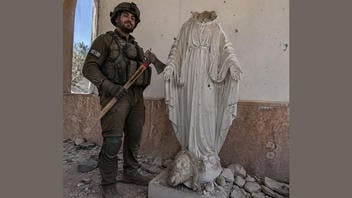
Does the viral image of an Israel Defense Forces soldier wielding an axe beside a headless Christian religious statue really show an act of vandalism? No, that's not true: It's a fake photo. Two days after an image surfaced showing a real vandalism incident in Lebanon, there was no news reporting about a documented second instance of IDF vandalism of a Christian icon. An AI detection tool reported 83.2 percent confidence the image was AI-generated. Additional clues the image is fake are the inconsistencies with Catholic iconography and the axe itself, which appears to be inspired by video game weaponry, not a real-world axe.
The fake image appeared in a post (archived here) published on X by @FarhatNadia25 on April 21, 2026. The post was simply captioned:
Again 😡
This is the image included with the post:
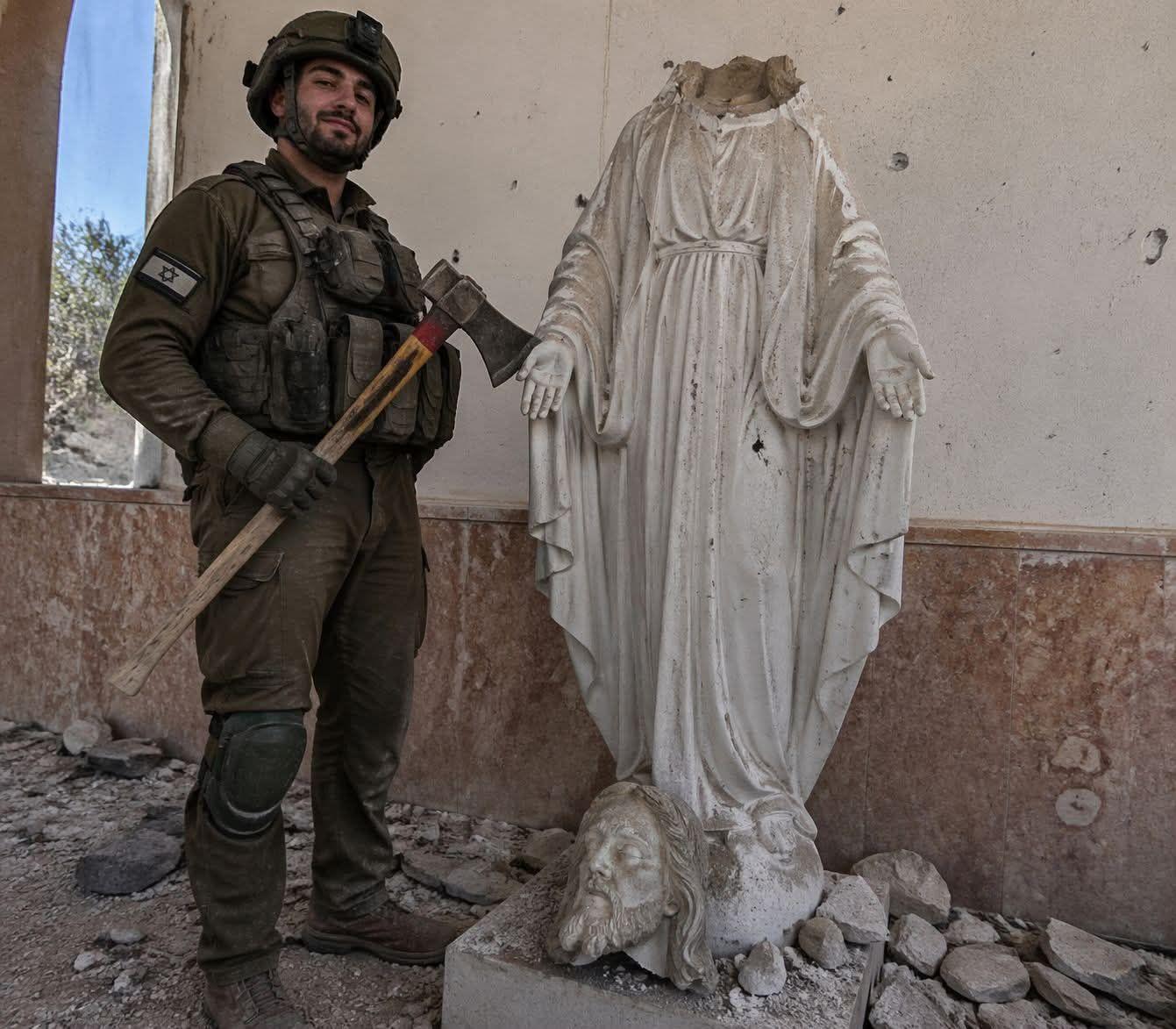
(Image source: @FarhatNadia25 post on X.)
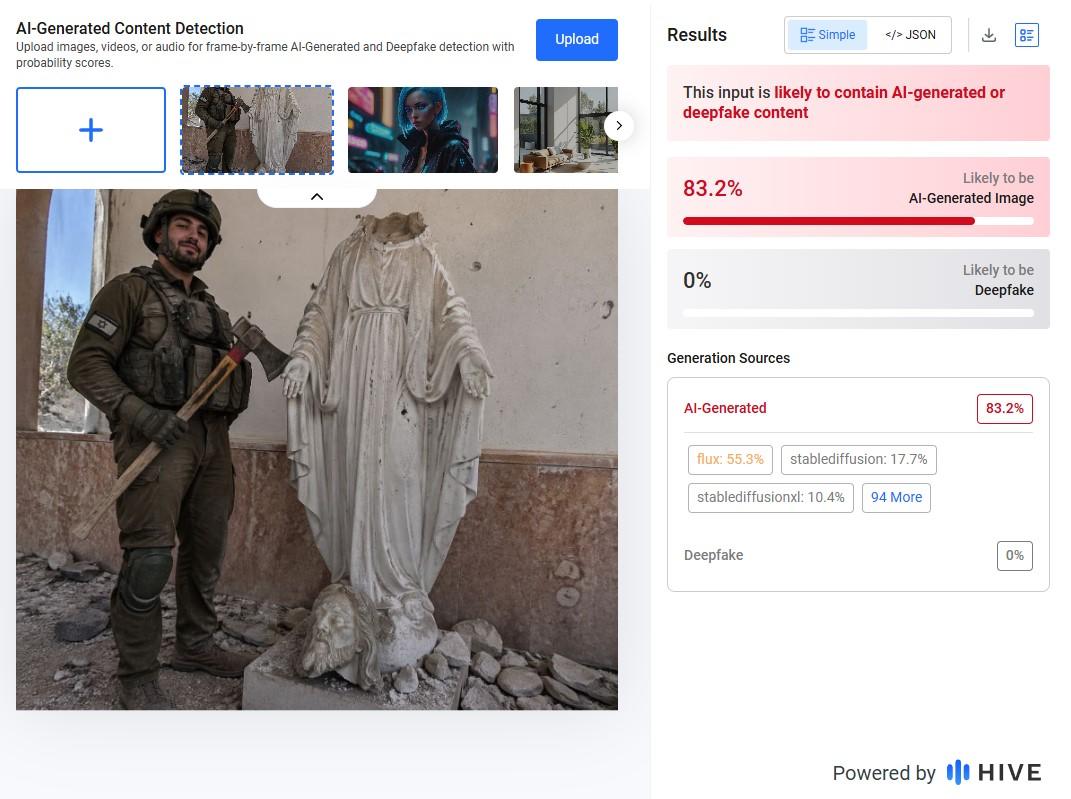
The Hive Moderation tool to detect AI-generated content determined with 83.2 percent confidence that the image was AI-generated (pictured below).
(Image source: Hive Moderation.)
A Google Lens reverse image search for this image found many duplicate social media posts but no match in news reporting about a second incident of vandalism. A search of Google News for the terms "Israeli soldier vandalize statue" produced news stories about the first incident (archived here), but nothing regarding a second incident.
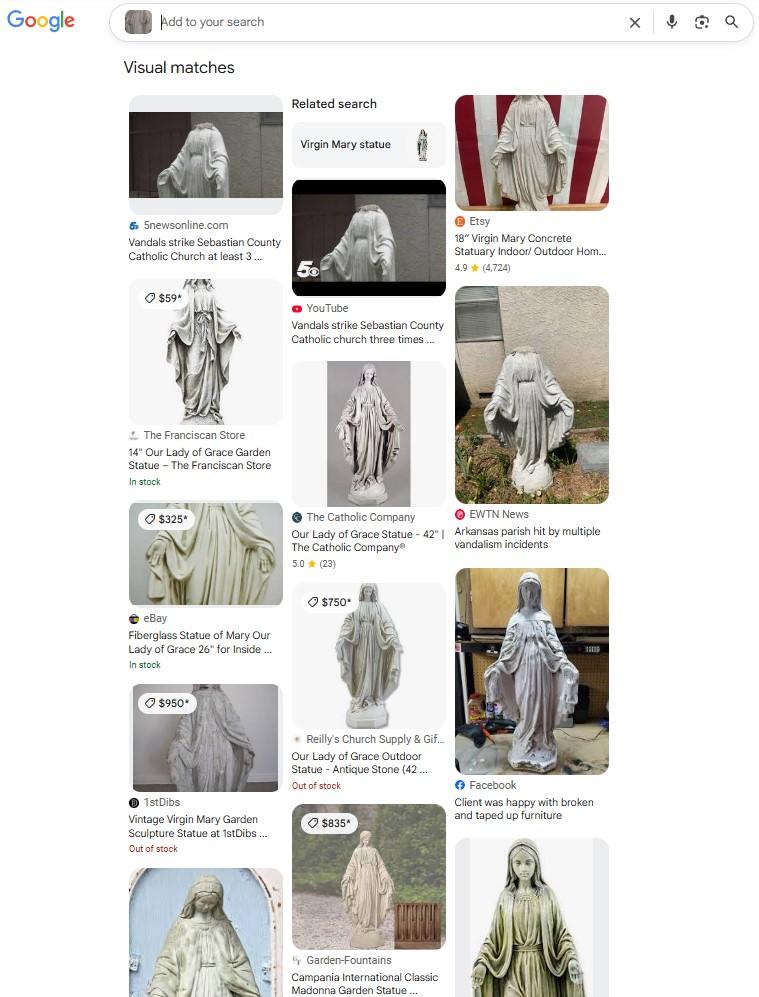
The statue in the fake picture is based on the iconographic (archived here) form of the Virgin Mary, sometimes painted with a blue robe draping over the forearms. The icon has a calm gesture with hands held low, palms turned to face the viewer. It is unmistakable as a Mary figure even without a head. A reverse image search with Google Lens, focusing on just the robes of the statue, returned visual matches showing similar Virgin Mary statues, some also vandalized (pictured below).
(Image source: Google Lens.)
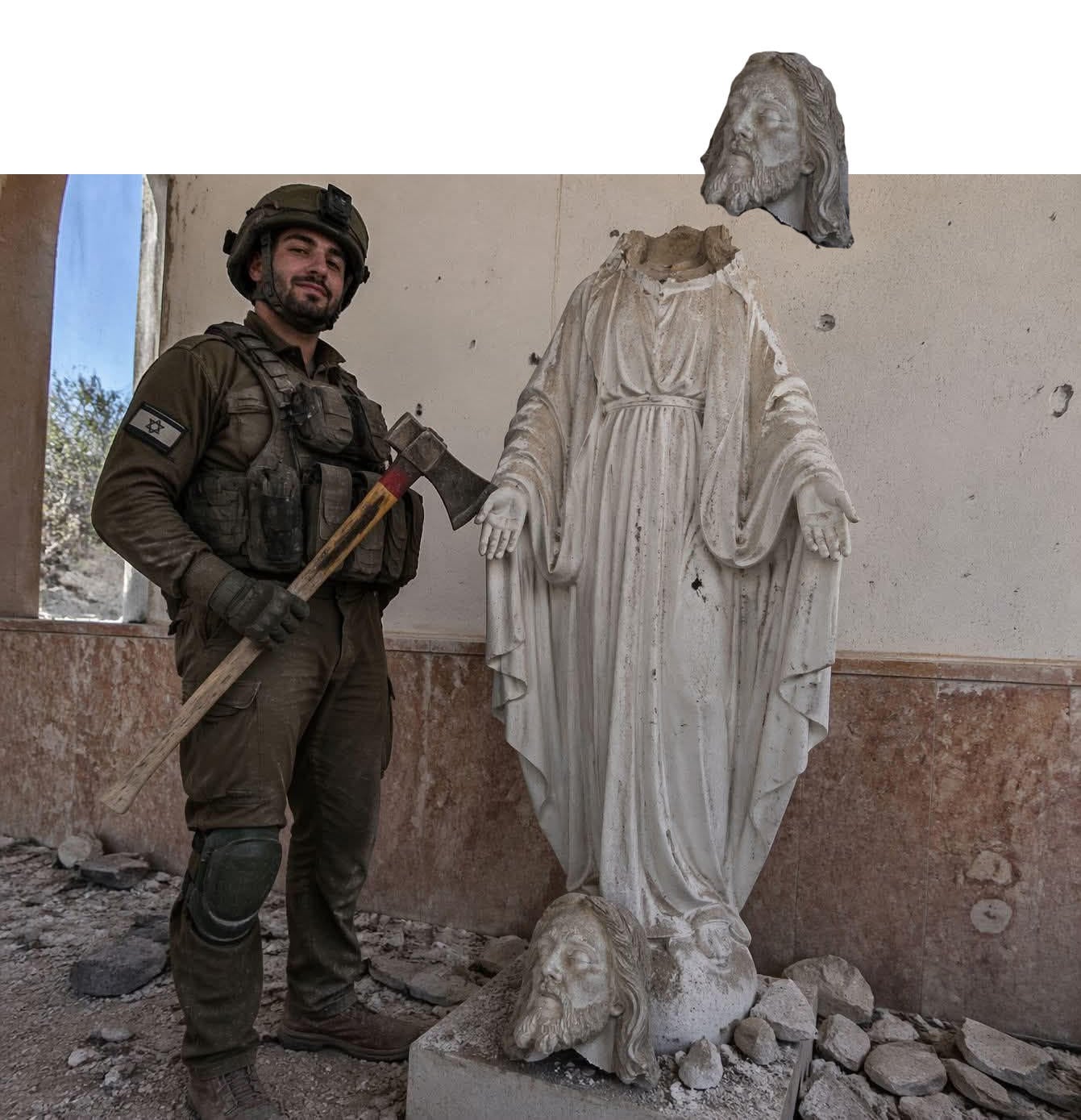
The fake image shows a broken-off head at the base of the statue. The head has the unmistakable iconographic face of Jesus. His beard parts into two symmetrically curling sections and the left side of his neck is visible under his shoulder-length hair. The AI appears to have derived this head from traditional crucifixion imagery, in which Jesus is depicted with closed eyes and his hanging head tilted toward his right shoulder. These details suggest the head was derived from crucifixion imagery, but the crown of thorns is absent. There is no tradition in which Jesus is pictured both standing and with his eyes closed. This head could not logically belong to the body in the image. The Lead Stories mock up (pictured below) shows how the two pieces of this broken statue would not fit together -- the neck and hair of Jesus could not fit into the remaining area at the shoulder.
(Image source: Lead Stories mockup with image from @FarhatNadia25 post on X.)
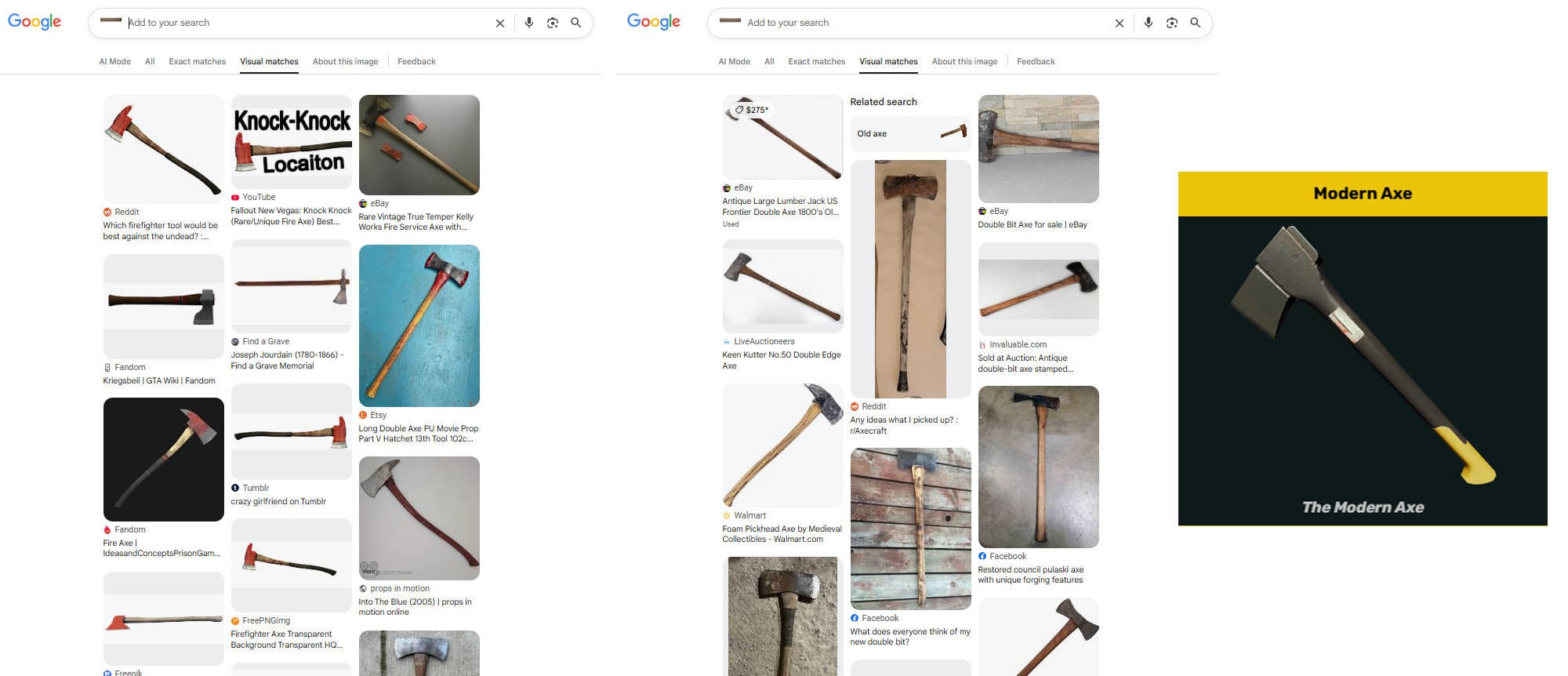
The axe in the fake image has some design elements which do not exist on real-world axes. There appears to be a squared-off reinforcement at the eye (the hole where the handle connects). Lead Stories isolated the axe in the image, placed it on a white background, and used Google Lens to try to identify a match. The visual match results skewed heavily toward red fire axes, which have a pick (pictured below left). This was likely the result of the red paint pictured on the handle in the fake image. Lead Stories removed the red area for another search (below center). This brought up mostly double-bit axes (having two cutting edges) but none have the stepped blocky area at the eye. A survival video game called The Forest features a single-bit "Modern Axe" (archived here) which more closely resembles the image than any real-world axe (pictured below right).
(Image source: Google Lens and The Forest Wiki.)